Writer’s Preface

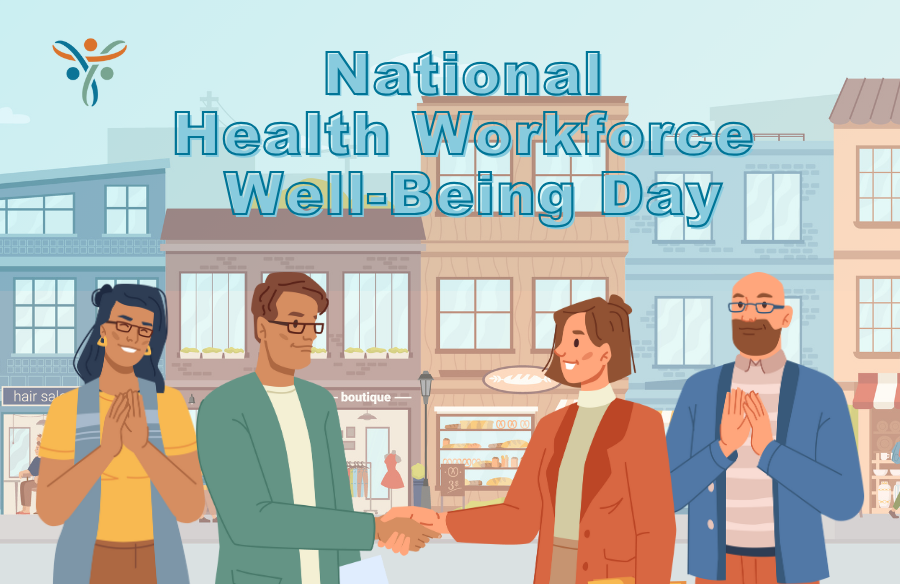
March 18th is National Health Workforce Well-Being Day (NHWWD), which commemorates the signing of the Dr. Lorna Breen Healthcare Provider Protection Act.

Dr. Lorna Breen was a physician and director of the emergency room at New York Presbyterian Hospital. Dr. Breen’s mental health declined during the pandemic as she and her team worked 12-hour shifts to treat patients, while managing staffing and resource shortages. Her primary concern was how her mental health impacted her ability to care for patients, and how that could influence peer opinion. Though she shared these struggles with loved ones, on April 26, 2020, Dr. Breen died by suicide. In honor of her dedication to providing care to patients and to acknowledge the importance of addressing healthcare provider well-being, a bill was proposed to and approved by the U.S. Senate to award funding to support health professionals, students, and employers in learning strategies to reduce burnout, improve mental health, and study the impact of stress on the health workforce. To learn more about Dr. Lorna Breen, visit www.drlornabreen.org/about-lorna/.

In honor of NHWWD, this blog post will highlight the pursuit of protecting health workers’ welfare at community health centers to sustain our health system and ensure quality patient care outcomes. OPCA also shares how our team supports the association’s staff providing services to Oregon’s federally qualified health centers.

Yakima Valley Farm Workers Center

Graciela Villanueva, Chief Human Resources Officer at Yakima Valley Farm Workers Clinic (YVFWC), has been with the health center for 18 years. Her first encounter with YVFWC was as a child receiving healthcare, so the health center is near and dear to Graciela’s heart.

“I went to Yakima Valley Farm Workers Clinic when I was little. It was the primary way I got my healthcare. One of my earliest memories is my first dental appointment when I was five, and I remember sitting in the operatory, and the dentist or hygienist was doing their thing. . . that memory just lives in my brain. It was a fun, positive experience.”

Graciela Villanueva

Yakima Valley Farm Workers Clinic is focused on creating a collaborative, positive work environment. Pillar two of the health center’s strategic plan is people and learning.

“The objectives we have that are part of the strategic plan are directly pulled from the employee engagement survey, and the themes employees said [were] important to them.”

Graciela Villanueva

The health center intentionally engages employees in providing feedback to help leadership identify focus areas and implement strategies to improve workforce wellness.

Inspired by the CEO listening tour (see description in Question 4), Yakima Valley Farm Workers Clinic holds CEO forums structured as info sessions with an open question and answer period. The primary focus of the forums is to create a safe space for employees to speak up and share their concerns. The sessions are well received by employees and very popular.

Employee benefits education is another initiative the HR team is focusing on this year. Graciela shared:

“This year, one of the things we’ve begun doing is rolling out a pretty intensive [employee benefits] communication campaign around the different benefits that we have, [promoting] things that support physical, mental, emotional, and mental wellness like our gym membership discount program or [employee assistance program].”

Graciela Villanueva

The campaign aims to increase utilization of benefits such as the maternity case management program. One of the program perks is receiving a $50 Amazon gift card upon enrollment to help buy caregiving supplies. As part of the employee benefits communication campaign, the benefits team will include a recurring survey asking employees what benefits are most meaningful to them and what they want to see offered.

Human resources at Yakima Valley Farm Workers consists of several teams. The benefits team includes a benefits manager, two benefits and leave analysts, and a leave administrator. The benefits teams are part of the larger total rewards department, which includes a compensation team. Additionally, the HR Business Partner and Recruiting Team, and others in the department each have roles in supporting all of our initiatives.

About four years ago, Yakima Valley Farm Workers Clinic’s CEO, Christy Bracewell Trotter, conducted a 3-month, organization-wide listening tour in which she visited every location across Oregon and Washington State to meet with health center staff. Graciela estimates about 80% of their employees were able to directly engage with the CEO to share what they love about the health center and areas for improvement. Scribes accompanied Christy on the listening tour, collecting notes and data. This information was shared with the HR team, captured in the system, and reviewed to determine how to address feedback.

“We were intentional with communicating back to employees, here’s what we’ve heard, here’s what we’ve done, here’s what we can’t do and why. It was an amazing experience not just for our CEO, but as an organization for us to get all of that feedback and data.”

Graciela Villanueva

One of the main themes noted during the CEO listening tour was employees valuing the opportunity for their voice to be heard. The tour was a catalyst for fostering transparent communication and identifying pathways for employee engagement. YVFWC employees continue to engage with Christy Bracewell Trotter in recurring CEO Forums (see description in Question 2).

YVFWC also began implementing an employee engagement survey about three years ago and has seen tremendous engagement with a response rate of about 80%.


Epiphany
“You hear about survey fatigue and [based on] all the reading that I’ve done on the topic, fatigue only occurs when employees take the time to fill out their survey, they share their comments, and nothing happens. Responding to survey data doesn’t mean that [leadership] implemented everything the [employee] said, but that we listened, acknowledged, and responded.”

Graciela Villanueva

Graciela emphasized how important it is to communicate how employees’ responses inform strategies to address the health center’s needs, even when prioritizing differing objectives.

#1 – A Positive, Engaging Work Culture

“If you’re happy when you go to work, if you feel welcome, if [you know] your opinion matters, you’re going to like being at work.”

#2 – Professional Development and Career Growth

“As I think about the feedback we get from our employees, growth and development opportunities are so important to them. . .Whether it’s through continuing education or a workforce development program, we have really dove into creating career ladders and other training opportunities for staff.”

One of the largest employee groups at Yakima Valley Farm Workers Clinic is medical assistants (MA). YVFWC created a career ladder by developing ranks under the position level including MA Mentor, EPIC User MA, and Lead MA.

The health center also manages medical, dental, and nurse practitioner residency programs. The HR team has another workforce development program in the works. Cross our fingers that we’ll learn more later this year!


“Community health really is social justice. . . when you think about the sixties when community health was first coming up and funding became available [it] was a revolutionary idea that poor people should have healthcare. I continue to see it as a social justice cause, and that [it] should be a right for all Americans. . . [and] Having the opportunity to work for a healthcare organization like Yakima Valley Farm Workers Clinic is a privilege and an honor.”

Graciela Villanueva

Mosaic Community Health

Jennifer Stewart, Director of Human Resources at Mosaic Community Health, has been with the health center for almost 12 years. When a new employee is oriented to the health center, one of the trainings focuses on what brought them to community healthcare. Jennifer graciously shared her reason for joining the health center movement:

“I have a daughter who was born with a genetic health condition that will require care her whole life. . . it made me recognize the value and importance of being able to thrive in life. Healthcare is a right for everyone and I think it’s a beautiful thing that we provide and make available to anyone.”

Jennifer Stewart
Having engaged, thriving employees is a key pillar of Mosaic Community Health’s strategic plan as the health center manages 16 locations. The goal related to employee well-being includes a focus on supporting learning and growth opportunities and building out career pathways. The HR team guides employees by setting expectations with staff at all levels of the organization to foster a just culture and create a respectful environment. This involves creating connection by helping individuals find meaning and purpose in their work, and providing opportunities to be seen and heard. Additionally, Mosaic’s leadership development training is grounded in evidence-based research that focuses on fostering employee engagement.

“We recognize that leadership is a continuous learning journey that requires ongoing investment.”

Jennifer Stewart

The HR team uses a couple of frameworks to support health center staff:

  1. Recognition Programs
    • Quarterly and annual award program where employees nominate others for exemplifying Mosaic’s Values. The nominations are uploaded to the HR system, so an employee can see what their peers have to say about them.
    • Anniversary Milestone program, which has different recognitions for different anniversaries. Recognition may include awarded time off or Mosaic bucks to exchange for incentives.
    • CATCH is peer-to-peer recognition that can be delivered electronically or as paper forms in the break rooms.
  2. Participative Management or the Co-production of Joy, which is training leaders to adopt a two-way, collaborative partnership to manage performance by getting employees what they need to successfully do their work and providing feedback to supervisors from their team members.
  3. Local partnerships are another resource the team shares with health center staff. Last year, Mosaic partnered with RootedHomes which provides environmentally sustainable and permanently affordable homeownership opportunities for those who contribute to the fabric of the Central Oregon economy and community. Curious about the partnership? Learn more by reading Mosaic’s partnership announcement.

The HR team – including an HR generalist and coordinator – in partnership with Team Thrive.

Post pandemic, two committees respectively dedicated to employee recognition and wellness were combined to create Team Thrive. The vision with Team Thrive is to have representation from all 18 locations to collectively plan opportunities for celebration, recognition, and connection. These include gathering all 460 employees twice a year, bringing in guest speakers focused on professional or personal development, and staff socials. In the past, Team Thrive organized dog therapy visits, yoga sessions, and (my personal favorite) a sound bath.

Annual engagement surveys – consisting of nine questions – are posted throughout the year to measure progress in achieving strategic goals. This helps the team assess whether employees feel recognized by their leader, respected by their colleagues, and aligned with Mosaic’s mission. The surveys help identify one or two key areas from a systems perspective to focus on during the year. Currently, based on survey results, Mosaic’s team is focusing on improving how they communicate change to staff:

“I think the key thing is to support employees with navigating change because it is inevitable. . . [by] being transparent with communication.”

Jennifer Stewart

Reports are also curated for leaders to help them with change efforts that are within their scope of control.

Also, as part of the strategic planning process, the team facilitates employee focus groups to inform the long-term vision over the next three years.

#1 – The relationship with their leader

Mosaic invests in leadership development to support supervisors. The team developed a manifesto with guiding principles for how to lead at the health center.

#2 – Flexibility to manage life and work


#3 – Connection to their team and finding meaning and purpose in the work.

Team Thrive and the HR team strive to tell stories by highlighting employee connection to providing community healthcare and affirming alignment with Mosaic’s values.

#4 – Infusing fun and humor into work

“All the amazing humans that are here, first of all.”

Jennifer Stewart

Oregon-Primary-Care-Association-logo

Oregon Primary Care Association

Cindy Tan“I’m OPCA’s Human Resources Sr. Manager and have been with OPCA for over 13 years. I support internal staff and leaders in the human resources space.”

Cindy supports all aspects of the OPCA internal human resources functions (such as talent strategy, retention, workplace culture, and other HR initiatives) with an equitable and employee-centered approach, while ensuring compliance with employment laws and organizational policies.

  1. How do you describe your approach to supporting the organization and its employees?

    Culture is just as important as compliance, so as much as possible, I try to prioritize an employee-centered approach to our policies and practices.

  2. How do you support staff experiencing burnout?

    I think a lot of what we do is try to get ahead of burnout – making sure our staff feel valued as a human and supported as an employee, giving space to staff when life gets in the way, and expressing appreciation for good work. We also offer a supportive work culture, great benefits, and very generous time off policies to combat burnout.

  3. In your opinion, what three (3) aspects of employee wellness are most important?

    Work-life balance, mental & emotional well-being, and flexible work schedules are commonly tied to retention – if you treat people well, they are more likely to stay. But it’s also a way to show staff that we value them personally as well as professionally. We can give staff more autonomy to manage their time and also expect that good work will be done in return. It shows mutual respect and trust.

  4. What motivates you to work with OPCA and supporting staff?

    I love that OPCA’s work and culture align with our mission and values, and I love that I get to support such a good team of people doing incredible work.


The Staff Engagement Committee (SEC) aims to develop ongoing ways to organize and conduct activities to engage staff members in their work and OPCA. Staff engagement is an employee’s emotional commitment to the organization, mission, and strategic goals. Engaged staff give discretionary effort, increasing performance while decreasing turnover. SEC works with Directors and the Senior Leadership Team to increase overall engagement.

Staff engagement is important because it cultivates a sense of community in the workplace. We spend so much of our lives at our work and so making that time as meaningful as possible is integral to someone’s holistic wellbeing.

Torie Baldwin, APCM Manager with OPCA


OPCA is excited to welcome Michelle Bowers as our new Workforce Development Manager! Michelle will play a key role in supporting Oregon’s community health centers by developing and implementing workforce training and technical assistance programs. Her work will focus on strengthening workforce pathways, sharing recruitment and retention tools and strategies, identifying and promoting health professional education and training opportunities, and collaborating with state and national partners to address healthcare workforce challenges. She will also facilitate the HR Leaders Peer Group, provide guidance on workforce incentive programs, and help health centers navigate evolving HRSA workforce requirements.

Health center members can reach out to Michelle at mbowers@orpca.org for:

  • Guidance on workforce recruitment, retention, and incentive programs
  • Best practices and technical assistance for workforce development
  • Support in building partnerships with educational institutions and workforce organizations
  • Updates on federal and state workforce initiatives and requirements
  • Participation in the HR Leaders Peer Group for shared learning and networking

Please join us in welcoming Michelle to OPCA!