Note: this blog post was written and produced by Neighborhood Health Center
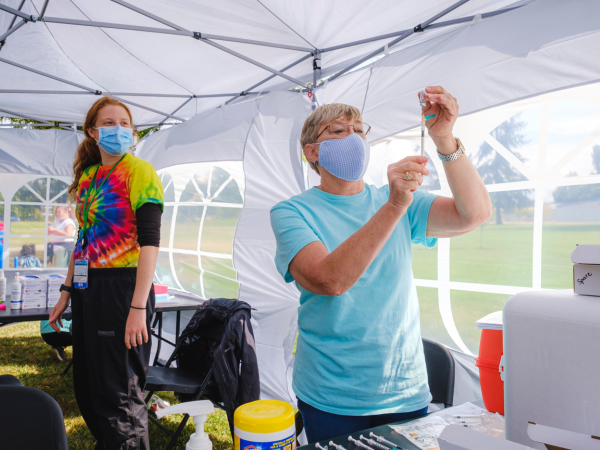
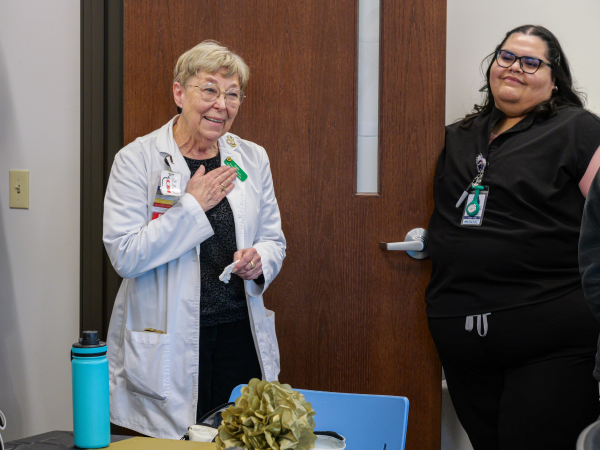
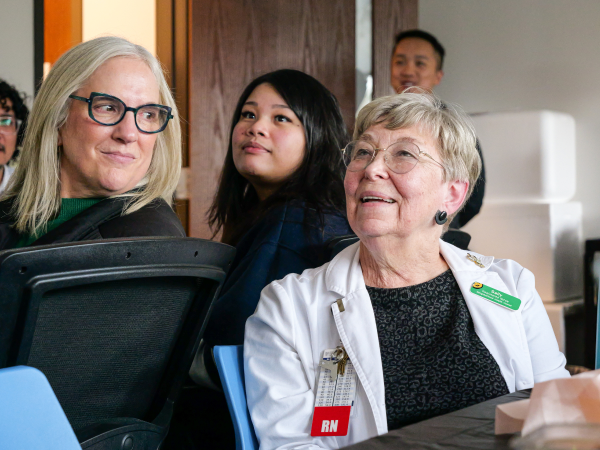
Community health centers are built on relationships—long-term, trusted connections between patients, care teams, and communities. Few stories illustrate that better than the career of Sally Loprinzi, a community health nurse whose nearly 60 years of service reflect the very purpose of the CHC model.
When Sally decided to become a nurse in the 1960s, career options for women were limited. Nursing offered a path grounded in service, learning by doing, and being close to the people who needed care most.
That foundation shaped a career that took her across the country (from mining towns in California and tribal villages in Alaska to family homes in Montana), always working in places where access to care was limited, and relationships mattered most.
“I learned at the bedside,” Sally says of her hospital-based diploma program. “You learned by doing.”
That hands-on, community-rooted approach never left her.
Community Health, Long Before It Had a Name
Long before terms like whole-person care and community-based delivery were widely used, Sally was practicing them. As a public health nurse in Montana, she visited families in their homes, supported high-risk parents and children, and helped people build skills that made health possible—not just in a clinic, but in daily life.
“Most parents wanted to do well,” she explains. “They just needed support, patience, and someone who believed in them.”
That belief (paired with time, trust, and continuity) is at the core of what community health centers provide.
Finding a Home in the CHC Model
After decades in nursing, Sally could have retired. Instead, she joined Neighborhood Health Center (NHC) in Oregon just six months after it opened, drawn by its mission to serve underserved communities.
“At NHC, I could keep working where the need was,” she says.
Over 15 years, Sally became a steady presence in the clinic—rooming patients, administering vaccines, following up by phone, answering patient messages, and supporting providers however needed. As care delivery evolved, so did her role. The tools changed, but the work did not.
“People just want to be heard,” she says.
Patients returned year after year because they trusted her. Staff relied on her institutional knowledge, calm presence, and willingness to step in wherever needed. Leadership recognized her as someone who embodied the mission in practice, not just words.
The Workforce Behind the Safety Net
Sally’s story highlights a truth CHCs know well: access to care depends on people who stay. The community health workforce is not interchangeable. It is built over time, through relationships, trust, and deep understanding of the communities served.
As safety-net organizations face growing financial and workforce pressures, stories like Sally’s underscore what is at stake. Community health centers are not just service sites; they are anchors, sustained by people who choose this work because they believe in it.
A Legacy That Reflects the CHC Mission
As Sally retires, she leaves behind more than years of service. She leaves a legacy of compassion, teamwork, and belief in the power of community-based care.
Her values are simple:
Be patient.
Be open.
Look for the good in people.
Community health centers exist because of people like Sally and they continue to matter because those values still meet real needs, every day, in communities across Oregon and the country.
Related Posts